

When it comes to the dental implants vs. dentures debate, the decision you make can significantly shape your quality of life for years, even decades to come.
Whether you’ve recently lost a tooth, are planning, or have been wearing dentures for years and wondering if there’s something better, this guide was written with one goal: to give you the clearest, most honest information possible so you can make an informed decision for your smile, your health, and your confidence.
At Transcend Dental Implants and Periodontics in Tulsa, our periodontists work with patients every day who come in confused, overwhelmed, or misinformed about their options. This post breaks everything down — no jargon, no fluff — just the real clinical picture you deserve to see.
What Are Dental Implants?
A dental implant is a small titanium post that is surgically placed into your jawbone to serve as an artificial tooth root. Once the implant fuses with the bone through a process called osseointegration, a custom-made crown is attached, creating a restoration that looks, feels, and functions just like a natural tooth.
Implants can replace a single tooth, multiple teeth, or support a full arch of teeth through procedures like All-on-4 or implant-supported dentures.
What Are Dentures?
Dentures are removable prosthetic devices designed to replace missing teeth. They come in two main forms:
- Complete dentures replace all teeth in the upper or lower jaw (or both)
- Partial dentures fill in gaps when some natural teeth remain
Traditional dentures rest on your gums and are held in place by natural suction, adhesives, or clasps on neighboring teeth. They are typically more affordable upfront and require no surgery.
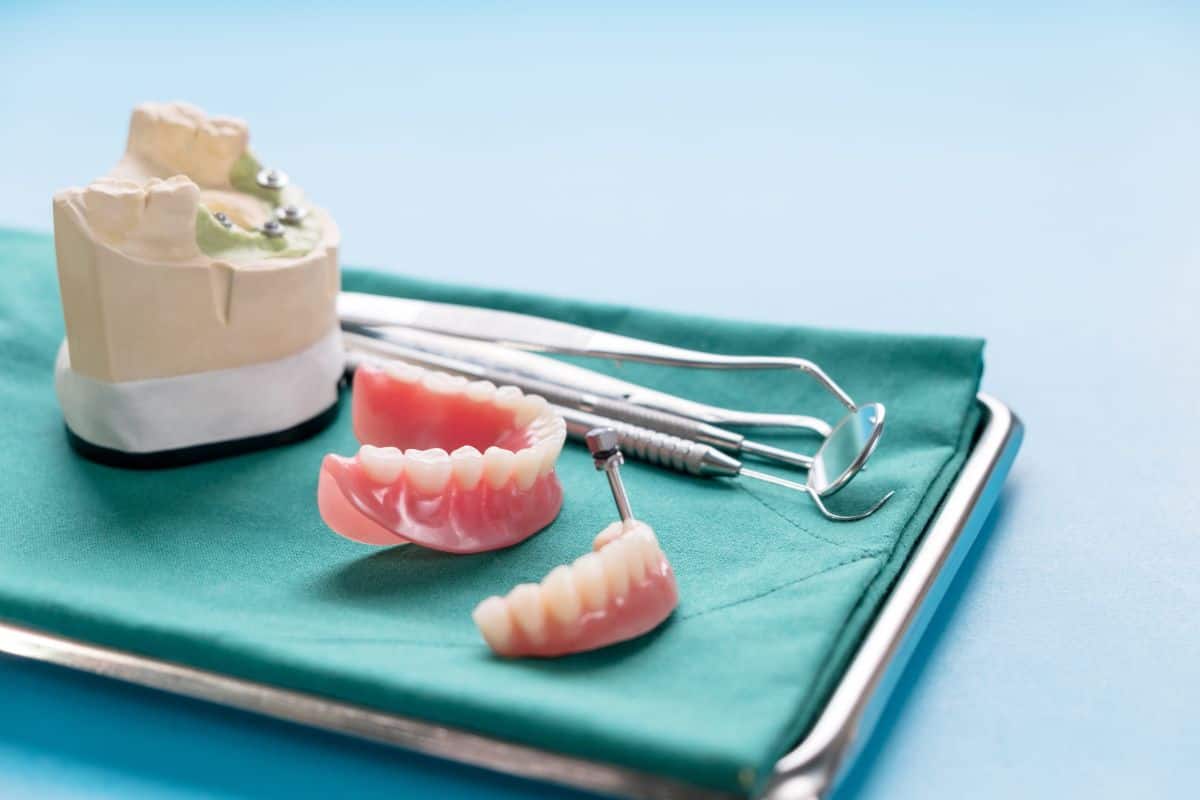
Dental Implants vs Dentures: Pros and Cons: A Side-by-Side Breakdown
Understanding the full picture means looking at both options honestly — the good, the not-so-good, and everything in between.
Dental Implants — Pros
- Looks and feels like a real tooth — Implants are the closest thing modern dentistry has to natural teeth. They are anchored in your jaw, so they don’t shift, slip, or click.
- Preserves jawbone — When you lose a tooth, the bone underneath begins to shrink (a process called bone resorption). Implants stimulate the jawbone just like a natural root, stopping this deterioration in its tracks.
- No diet restrictions — You can eat an apple, a steak, or corn on the cob without worry. Implants can handle the same biting forces as natural teeth.
- Long-term investment — With proper care, dental implants can last 20 to 30 years or even a lifetime. Many of our patients in Tulsa have had their implants for decades without issues.
- No adhesives, no removal — You brush and floss implants exactly like natural teeth. No overnight soaking, no messy denture adhesive.
- Boosts self-confidence — Patients consistently report that implants dramatically improve their confidence in social and professional settings.
- Supports facial structure — Bone loss from missing teeth causes the face to sag and age prematurely. Implants prevent this, helping you maintain a youthful facial profile.
Dental Implants — Cons
- Higher upfront cost — Implants require a greater initial financial investment than dentures.
- Surgery is required — The placement procedure is minor oral surgery, which means healing time is involved.
- Not everyone qualifies immediately — Patients with significant bone loss may need a bone graft before implant placement. Certain health conditions may also affect eligibility.
- Longer treatment timeline — The full process from placement to final crown can take several months.
Dentures — Pros
- Lower initial cost — Dentures are generally more affordable upfront, making them accessible to more patients.
- No surgery required — Dentures are non-invasive, making them a viable option for patients who cannot undergo surgery.
- Faster turnaround — The process of getting dentures is typically faster than that for implants.
- Can be adjusted — Dentures can be relined or adjusted as your mouth changes over time.
Dentures — Cons
- Bone loss continues — Because dentures rest on the gums and provide no root stimulation, jawbone resorption continues unchecked. Over time, this changes your facial appearance, leading to dentures that fit poorly.
- Slipping and instability — Dentures can shift while eating or speaking, causing embarrassment and discomfort.
- Dietary limitations — Hard, crunchy, or sticky foods are often off-limits with traditional dentures.
- Daily maintenance — Dentures must be removed every night, cleaned, and soaked — an extra routine that many patients find inconvenient.
- Reduced chewing efficiency — Studies show denture wearers chew at significantly reduced capacity compared to people with natural teeth or implants, which can affect nutrition.
- Shorter lifespan — Dentures typically need to be replaced every 5 to 8 years as the mouth changes shape.
The Bone Loss Issue — Why Periodontists Take This Seriously
From a periodontist’s clinical perspective, one of the most underappreciated differences between implants and dentures is the effect on the jawbone beneath them.
Every year, a patient who wears traditional dentures sees the ridge of bone supporting them shrink a little more. This is not just a cosmetic concern. As bone volume decreases, dentures fit more loosely, the lower face collapses inward, and patients look significantly older than their age. Eventually, there may not be enough bone left for an implant without extensive grafting.
This is why we often tell patients in Tulsa: if you are even remotely considering implants in your future, acting sooner rather than later preserves your options.
Who Is a Good Candidate for Dental Implants?
Most healthy adults are candidates for dental implants. You may be an ideal candidate if you:
- Have one or more missing teeth
- Have a fully developed jawbone
- Have adequate bone density to support the implant (or are willing to undergo a bone graft if needed)
- Do not have uncontrolled diabetes or other conditions that impair healing
- Do not smoke, or are willing to quit, as smoking significantly reduces implant success rates
- They are committed to good oral hygiene
A thorough evaluation at our Tulsa office, including 3D imaging, allows us to assess your bone structure, gum health, and overall oral condition to determine the right treatment plan for you.
What About Implant-Supported Dentures?
For patients who need full-arch replacement, implant-supported dentures offer a powerful middle ground. These are dentures that are anchored to implants rather than resting on the gums.
Benefits include:
- Dramatically improved stability — no more slipping
- Better chewing efficiency compared to traditional dentures
- Continued bone preservation at implant sites
- More affordable than individual implants for every tooth
This option is particularly popular among our full-arch restoration patients in Tulsa who want the security of implants with the convenience of a removable prosthetic.
Call us today to schedule your consultation and take the first step toward a smile that lasts a lifetime.
Why Choose Transcend Dental Implants and Periodontics
There are many dental practices in Tulsa but Transcend Dental Implants and Periodontics is built around one thing: specialist-level expertise in dental implants and the gum and bone health that supports them.
Here is what sets us apart:
- Periodontist-led care — Periodontists are dental specialists with advanced training specifically in the structures that support your teeth — the gums, the bone, and the connective tissues. Implant success depends heavily on these structures, which is why having a specialist place and manage your implants makes a measurable difference.
- Advanced 3D imaging technology — We use cone beam CT scanning to evaluate your bone in three dimensions before any procedure begins, so there are no surprises, and your treatment is precisely planned.
- Full-service implant practice — From single implants to full-arch restorations and implant-supported dentures, we handle every stage of your care under one roof — no need to be shuffled between offices.
- Transparent, honest consultations — We take the time to walk you through your options, explain the realistic timeline and costs, and help you decide what is truly right for your life and budget. No pressure. No upselling.
- Tulsa community focused — We are proud to serve patients across Tulsa and the surrounding communities. Our patients are our neighbors, and we treat them accordingly.
- Proven long-term outcomes — Our patients return year after year, not because they have problems, but because they trust us for their ongoing periodontal maintenance. That trust is something we never take for granted.
Your smile is one of your greatest assets. Whether you’re weighing dental implants vs dentures, exploring implant-supported solutions, or ready to move forward, our team at Transcend Dental Implants and Periodontics in Tulsa is here to guide you every step of the way.
Conclusion
The dental implants vs dentures conversation is not one-size-fits-all. Still, the clinical evidence overwhelmingly points in one direction for patients who qualify: dental implants offer superior long-term outcomes for bone health, function, comfort, and confidence.
That said, dentures serve an important role and remain the right choice for some patients based on their health, budget, or timeline. The most important thing is that you make your decision with complete, accurate information — not assumptions or outdated advice.
At Transcend Dental Implants and Periodontics in Tulsa, our goal is to be the trusted expert in your corner as you navigate these decisions. We invite you to come in, ask every question you have, and let us help you build a treatment plan you feel genuinely good about.
Your smile. Your health. Your confidence. That is what we are here for.
Frequently Asked Questions
- How long do dental implants last?
With proper oral hygiene and regular dental visits, dental implants can last 20 to 30 years — and in many cases, a lifetime. The crown on top may need replacement after 10 to 15 years due to normal wear, but the implant post itself is designed to be permanent.
- Are dental implants painful?
Most patients are surprised by how comfortable the procedure is. It is performed under local anesthesia, and post-operative discomfort is typically mild and manageable with over-the-counter pain relievers. Many patients return to normal activities within a day or two.
- Can I get dental implants if I’ve been wearing dentures for years?
Possibly, but long-term denture wear often leads to significant bone loss, which may require a bone grafting procedure before implants can be placed. The sooner you explore this option, the more bone you are likely to have available. A 3D evaluation at our Tulsa office will give you a clear picture.
- How much do dental implants cost compared to dentures?
Dentures cost less upfront, but the full lifecycle tells a different story. They require replacement every 5–8 years, adhesives, and may incur costs from bone loss over time. Implants demand a larger initial investment but often prove more cost-effective over 10–20 years. Financing options are available at our Tulsa practice.
- What is the success rate of dental implants?
Dental implants have one of the highest success rates of any surgical procedure in dentistry — approximately 95 to 98 percent when placed by a qualified specialist in a healthy patient. Factors such as smoking, uncontrolled diabetes, and poor oral hygiene can affect outcomes, which is why a thorough pre-treatment evaluation is essential.